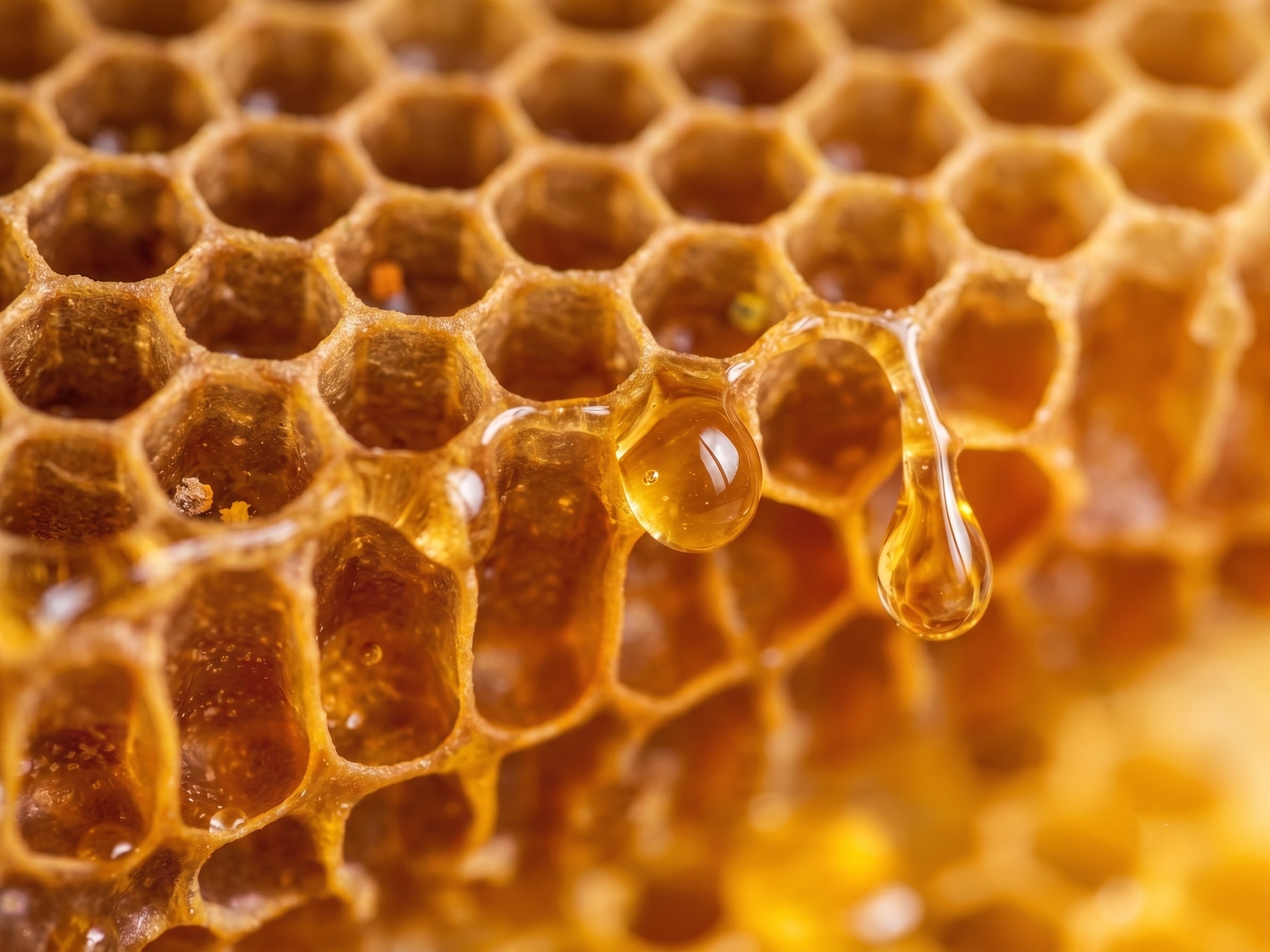
Natural Organic Honey
몰리나는 바다를 거치지 않고 안데스의 염호에서 거둔 호수염만을 트러플소금의 바탕으로 삼습니다.
숲의 향과 소금의 맛이 서로를 가리지 않도록 원료의 선별부터 배합과 충전까지 습도를 낮게 유지하며, 한 꼬집에도 프리미엄의 가치를 담고 있습니다.
Molina builds its truffle salt only on lake salt harvested from the salt lakes of the Andes, salt that has never passed through the sea.
So that the aroma of the forest and the taste of salt never mask one another, we keep humidity low from selection through blending and filling, and bring premium value to every pinch.
야생화꿀(Wildflowe Honey)
꿀은 벌이 꽃꿀이나 수액 같은 자연물을 모아 벌집에 저장한 뒤 채밀해 숙성시킨 식품입니다. 이름은 벌이 주로 찾은 꽃, 즉 밀원(蜜源)의 종류에 따라 붙습니다. 아까시꿀과 밤꿀처럼 하나의 밀원에서 나온 것을 단화밀이라 하고, 여러 꽃에서 온 것을 잡화꿀 또는 다화꿀이라 합니다. 야생화잡화꿀은 그중에서도 재배 밀원이 아닌 산과 들의 야생 꽃을 밀원으로 삼은 꿀을 가리킵니다.
우리나라의 꿀은 꽃이 피는 순서를 따라 나옵니다. 유채꿀, 잡화꿀, 아까시꿀, 밤꿀의 차례입니다. 아까시꿀이 전체 생산량의 대부분을 차지하는 구조 속에서, 잡화꿀은 그 다음 자리를 지켜왔습니다. 2014년 한국양봉협회 양봉산물연구소에 분석 의뢰된 국내 벌꿀 표본 3,796건 중 아까시벌꿀이 78.7퍼센트, 잡화꿀이 18.7퍼센트, 밤꿀이 2.6퍼센트였습니다.
단화밀과 잡화꿀의 차이는 품질의 차이가 아니라 성격의 차이입니다. 단화밀은 한 종류의 꽃에서 오므로 향과 색이 해마다 비슷하게 재현됩니다. 아까시꿀이 옅고 맑으며 부드러운 것은 아까시나무 한 종의 성질입니다. 반면 야생화잡화꿀은 그 해 그 자리에 무엇이 피었는지에 따라 달라집니다. 산벚나무와 싸리, 엉겅퀴, 산초, 들국화가 어떤 비율로 섞였는지, 그해 봄이 이르렀는지 늦었는지, 장마가 어느 시점에 왔는지가 그대로 병에 들어갑니다. 색은 대체로 짙은 호박빛에서 갈색에 이르고, 향은 여러 겹으로 나뉘며, 뒷맛에 약간의 쌉쌀함이 남는 경우가 많습니다. 같은 산에서 같은 벌통으로 받아도 해마다 맛이 같지 않습니다. 이것은 결함이 아니라 잡화꿀의 정의에 가깝습니다. 균일함을 원한다면 단화밀이 맞고, 그 해의 산을 맛보고 싶다면 잡화꿀이 맞습니다.
꿀을 두고 소비자가 확인해야 할 것이 하나 있습니다. 천연벌꿀과 사양벌꿀의 구분입니다. 사양벌꿀은 꿀벌을 기르는 과정에서 꿀벌이 설탕을 먹고 저장해 생산한 꿀을 말하며, 식품이기는 하나 천연벌꿀과는 다른 식품유형입니다. 시중 가격도 천연벌꿀이 1킬로그램당 4만~6만 원대, 사양벌꿀이 1만5천~2만 원대로 세 배가량 차이가 납니다. 겉모습이나 맛만으로는 가려내기 어렵고, 정확한 판별 방법은 탄소동위원소비율 측정입니다. 현 규정상 벌꿀 영업자는 이 비율을 측정해 그 결과에 따라 식품유형을 벌꿀(아까시꿀, 밤꿀, 잡화꿀 등)과 사양벌꿀로 구분해 표시해야 하며, 사양벌꿀은 12포인트 이상 크기로 그 사실을 알리도록 되어 있습니다.
2023년 12월부터는 국내산 천연꿀을 대상으로 꿀 등급제가 시행되고 있습니다. 대상 품목은 아까시꿀, 밤꿀, 잡화꿀이며, 생산농가나 소분업체가 신청하면 1차로 양봉협회와 양봉농협이 수분과 천연꿀 여부를 검사하고, 합격한 꿀에 대해 축산물품질평가원이 2차 품질 평가를 거쳐 1+, 1, 2 등급을 부여합니다. 판정 항목은 수분, 과당/포도당비, HMF, 향미, 결함, 색도, 탄소동위원소비율, 3-MT의 여덟 가지입니다.
이 항목들 가운데 수분과 과당/포도당비는 꿀을 다루는 입장에서 특히 중요합니다. 수분은 숙성도의 지표입니다. 벌이 벌집 안에서 충분히 수분을 날려 숙성시킨 꿀은 수분이 낮고 보관 중 발효될 위험이 적습니다. 과당과 포도당의 비율은 결정화의 속도를 좌우합니다. 포도당 비율이 높은 꿀일수록 빨리 굳으며, 야생화잡화꿀은 밀원 구성에 따라 결정이 이르게 오는 경우가 있습니다. 굳은 꿀은 변질이 아니라 성분 비율에 따른 자연스러운 현상이고, 중탕으로 온도를 올리면 풀립니다. 다만 온도를 높이면 HMF 값이 오르므로, 오래 두고 쓰실 것이라면 서늘한 곳에 두고 필요한 만큼만 부드럽게 녹이는 편이 낫습니다.
야생화잡화꿀은 향이 여러 겹이고 뒷맛에 무게가 있어, 옅고 단정한 단화밀과는 쓰임이 다릅니다. 향이 분명한 치즈나 견과, 구운 빵, 홍차처럼 상대가 또렷한 자리에서 제 몫을 합니다.
Honey is what bees gather from flowers and sap, store in the comb, and ripen before it is drawn off. Its name comes from the flowers the bees worked — the nectar source. Honey from a single source, such as acacia or chestnut, is called monofloral; honey drawn from many flowers is called multifloral, or wildflower honey when the sources are the wild flowers of hills and fields rather than cultivated crops.
In Korea the honeys arrive in the order the flowers open: rape, then wildflower, then acacia, then chestnut. Acacia accounts for most of the national crop, and wildflower honey has long held the place behind it. Of 3,796 domestic honey samples analysed by the Korea Beekeeping Association's research institute in 2014, acacia made up 78.7 percent, wildflower 18.7 percent and chestnut 2.6 percent.
The difference between monofloral and wildflower honey is one of character, not of quality. Monofloral honey comes from a single flower, so its colour and scent repeat closely from year to year; acacia honey is pale, clear and soft because that is what one tree is like. Wildflower honey instead depends on what happened to bloom, in that place, in that year. Which proportion of wild cherry, bush clover, thistle, prickly ash and wild chrysanthemum went into it, whether spring came early or late, when the rains arrived. The same hills and the same hives will not give the same honey twice. That is not a fault; it is close to the definition of the thing. If you want consistency, monofloral is the honey to buy. If you want to taste that year's hillside, this is.
There is one thing worth checking on any honey: whether it is natural honey or sugar-fed honey. Sugar-fed honey is produced when bees are given sugar during keeping and store what they are fed. It is a food, but it is a different category of food from natural honey, and the market prices differ roughly threefold. Appearance and taste will not tell them apart; the one reliable method is measuring the carbon isotope ratio. Under current rules a honey business must measure that ratio and label the product accordingly, either as honey (acacia, chestnut, wildflower and so on) or as sugar-fed honey, and sugar-fed honey must carry a statement to that effect set in 12-point type or larger.
Since December 2023, Korea has operated a grading system for domestic natural honey, covering acacia, chestnut and wildflower honeys. A producer or packer applies; the beekeeping association and the beekeeping cooperative first test moisture and whether the honey is genuinely natural, and honey that passes is then assessed by the Korea Institute for Animal Products Quality Evaluation for a final grade of 1+, 1 or 2. Eight items are judged: moisture, the fructose-to-glucose ratio, HMF, flavour, defects, colour, carbon isotope ratio and 3-MT.
Two of those matter especially to anyone handling honey. Moisture is the measure of ripeness: honey the bees have driven the water out of in the comb carries less moisture and is far less likely to ferment in storage. The ratio of fructose to glucose governs how quickly the honey crystallises — the higher the glucose, the sooner it sets, and wildflower honey can set early depending on which flowers made it. A set jar is not spoiled honey; it is the natural behaviour of that composition, and gentle warming in a water bath will loosen it. Heat raises the HMF value, though, so honey meant to be kept is better stored somewhere cool and softened a little at a time.
Layered in scent and weighted in the finish, wildflower honey is used differently from the pale, tidy monoflorals. It holds its own where the other ingredient speaks clearly — a strong cheese, nuts, toasted bread, black tea.
What is in honey
Honey is mostly sugar. Almost everything that is not water is fructose and glucose, and the balance between the two differs from honey to honey. Alongside them sit small amounts of sucrose and oligosaccharides, organic acids, amino acids, minerals, and the enzymes the bee itself contributed. Wildflower honey also carries polyphenols drawn from the many flowers that fed it — the source of its darker colour, its layered scent and the slight bitterness in the finish. Their content is generally higher than in the pale monoflorals.
The ratio of fructose to glucose is the figure that matters most in handling honey. The more glucose, the sooner it crystallises; the more fructose, the longer it stays fluid. In wildflower honey that ratio shifts from year to year with the flowers, so some years the honey sets early. A set jar is not spoiled honey. It is honey behaving as its composition dictates.
Moisture is the measure of ripeness. Honey the bees have driven the water out of in the comb carries less moisture and is far less likely to ferment in storage. Draw it too soon and the water stays, and water that stays becomes a problem with time. This is why moisture is one of the eight items in Korea's honey grading.
Heat is what honey tolerates least. Raise the temperature and the enzymes lose their strength while the HMF value climbs. HMF indicates that a honey has been heated or long stored, and it too is a graded item. Dropping a set jar straight into boiling water will loosen it, but what comes out is not quite the same honey.
The quality of honey is therefore decided by how far the bees ripened it, whether it met heat after the harvest, and where and how it was kept. There is nothing a person can add to it afterwards — only things that can be taken away. That is why Molina keeps its hands off the honey.
꿀의 대부분은 당입니다. 수분을 뺀 나머지의 거의 전부가 과당과 포도당이며, 이 둘의 비율이 꿀마다 다릅니다. 여기에 소량의 자당과 올리고당, 유기산, 아미노산, 무기질, 그리고 벌이 분비한 효소가 함께 들어 있습니다. 야생화잡화꿀에는 밀원이 된 여러 꽃에서 온 폴리페놀 계열 성분이 섞여 들어가는데, 색이 짙고 향이 여러 겹인 것과 뒷맛에 남는 쌉쌀함이 여기서 옵니다. 옅은 색의 단화밀보다 이 성분군의 함량이 대체로 높습니다.
과당과 포도당의 비율은 꿀을 다루는 입장에서 특히 중요한 값입니다. 포도당 비율이 높을수록 결정이 빨리 오고, 과당 비율이 높을수록 오래 흐르는 상태를 유지합니다. 야생화잡화꿀은 밀원 구성에 따라 이 비율이 해마다 달라지므로 결정이 이르게 오는 해가 있습니다. 굳은 꿀은 변질된 꿀이 아니라 성분 비율대로 움직인 꿀입니다.
수분은 숙성도의 지표입니다. 벌이 벌집 안에서 충분히 날려 보낸 꿀은 수분이 낮아 보관 중 발효될 위험이 적습니다. 채밀을 서두르면 수분이 남고, 남은 수분은 시간이 지나 문제가 됩니다. 꿀 등급판정이 수분을 여덟 개 항목 중 하나로 두는 이유입니다.
열은 꿀에서 가장 조심해야 할 요소입니다. 온도가 올라가면 효소가 힘을 잃고 HMF 값이 오릅니다. HMF는 꿀이 열을 받았거나 오래 보관되었음을 알려주는 지표이며, 역시 등급판정 항목에 들어 있습니다. 굳은 꿀을 급하게 끓는 물에 담그면 풀리기는 하나 다른 것이 되어 나옵니다.
그래서 꿀의 품질은 벌이 얼마나 숙성시켰는가, 채밀 이후 열을 받았는가, 그리고 어디에 어떻게 보관되었는가가 결정합니다. 사람이 뒤에서 더할 수 있는 것은 없고, 덜어낼 수 있는 것만 있습니다. 몰리나가 꿀에 손을 적게 대는 이유는 그 때문입니다.